- Highest point
- 4,630 m / 15,190 ft
- Cusco
- 3,400 m / 11,150 ft
- Soraypampa camp
- 3,900 m / 12,795 ft
- Humantay Lake
- 4,250 m / 13,944 ft
- Machu Picchu
- 2,430 m / 7,972 ft
- Rest days advised
- 2–3 in Cusco
The maximum altitude on the Salkantay Trek is 4,630 metres (15,190 ft) at Abra Salkantay, the Salkantay Pass. Machu Picchu itself sits far lower, at 2,430 metres (7,972 ft). If altitude is a concern for you, the answer is not fitness — it is time. Acclimatize in Cusco before you start.
How high is the Salkantay Pass?
The pass is the highest point of the trek and considerably higher than the citadel you are walking towards. Crossing the Vilcabamba range, the 60-kilometre (37-mile) route is not Everest or Annapurna — but sustained hill climbing through rough weather and terrain is all but guaranteed, even in the so-called dry season. Choosing the right season reduces the weather risk; nothing reduces the altitude.
Maximum altitude on the trek
The single highest point you cross is Abra Salkantay at 4,630 metres. The pass takes its name from Nevado Salkantay, the glacial peak that dominates this section of the range and rises to 6,271 metres (20,574 ft) — you walk beneath it, not over it.
After the pass the route descends steeply into cloud forest, then climbs again to the Inca ruins of Llactapata for a distant view of Machu Picchu, before the hot springs of Cocalmayo on the way to Machu Picchu Pueblo. That descent is what gives the trek its five ecosystems.
Altitude sickness on the Salkantay Trek
At 4,630 metres, oxygen availability is far lower than at sea level. Altitude sickness is a genuine concern and it does not respect age or fitness — strong hikers get it and sedentary ones sometimes do not. Symptoms usually begin as headache, nausea, poor sleep and shortness of breath.
Even if you are in good shape, do not push hard on the high days. Ascend gradually, keep a conversational pace, and tell your guide early if you feel unwell. Every departure carries a first-aid kit and bottled oxygen, and guides are trained to recognise the signs before you do.
How to acclimatize
The best defence is to give your body time before the trek begins. Plan the trip so the high days are not your first days in the Andes.
- Arrive early. Spend at least two to three days in Cusco (3,400 m) before the trek starts.
- Hydrate heavily. Drink more water than feels necessary, every day of acclimatization.
- Avoid alcohol. Skip it before and during the trek.
- Ask about medication. Talk to your doctor about acetazolamide (Diamox) as a preventative.
- Go slowly. Even acclimatized, keep a moderate pace — especially on days one and two.
Coca tea is the local remedy and worth trying; it is mild, legal and offered at every camp. It is not a substitute for the rest days.
Altitudes and distances
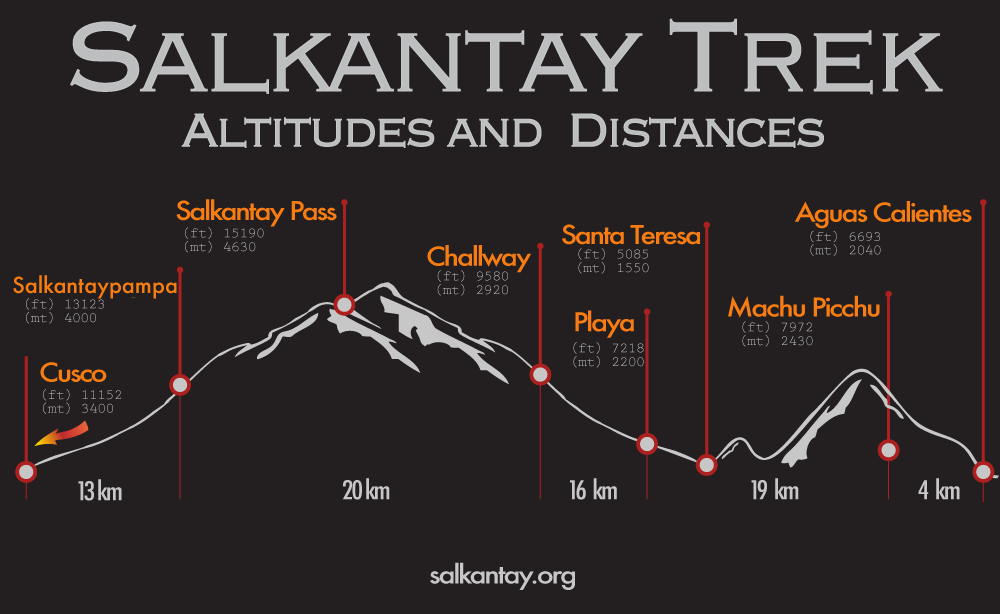
The full day-by-day distances, hiking times and elevation changes are in the distance and map guide.
Itineraries that build the rest days in
The surest way to acclimatize is to book an itinerary that does it for you. The 7-day Salkantay and Cusco trek opens with days in Cusco and the Sacred Valley before the high pass, and the 8-day off the beaten path route does the same at a slower pace. If you are arriving already acclimatized, the classic 5-day trek goes straight to the trail.