- Grade
- Moderate to challenging
- Technical skill
- None required
- Hardest day
- Day 2 — the pass
- Longest day
- 7–8 hours walking
- Train from
- 2–3 months out
Is the Salkantay Trek hard?
The Salkantay Trek is moderate to challenging, mostly because of elevation and terrain rather than technique. There is no climbing: no ropes, no harnesses, no mountaineering skill. What it does demand is sustained effort over several long days at high altitude. The hardest stretch is the climb to the Salkantay Pass, where the air is thin enough to slow everybody down.
With sensible preparation, hikers across a wide range of fitness levels finish this trek every season. The key is giving your body time to adapt to both the distance and the thin air — which is why acclimatization matters more than gym hours.
Physical preparation
“Am I too out of shape for a Machu Picchu hike?” It is the most common question we get. If you enjoy being outdoors, very little should stop you — but time spent preparing makes the difference between enduring the trek and enjoying it. Begin cardiovascular and strength training two to three months before departure.
Five ways to train for Salkantay
- Build cardio and leg strength. Swim, cycle, walk briskly or jog, and add a short burst of harder effort each session. Squats, lunges, calf raises and step-ups prepare your legs for long descending days — which hurt more than the climbs.
- Strengthen your back and core. Load a daypack with water bottles and practise step-ups. Push-ups, planks and bridges build the core that keeps you balanced on uneven ground.
- Adjust what you eat. More fruit and vegetables, fewer refined carbohydrates, plenty of water. It shows up quickly in how you feel on a hill.
- Do real hikes. Walk variable terrain two or three times a week in the boots you will wear in Peru. Work up to five- or six-hour days and add hills or stairs.
- Train your head as well. A consistent yoga or breathing practice helps more than people expect at altitude, and visualising the hard day makes it smaller when it arrives.
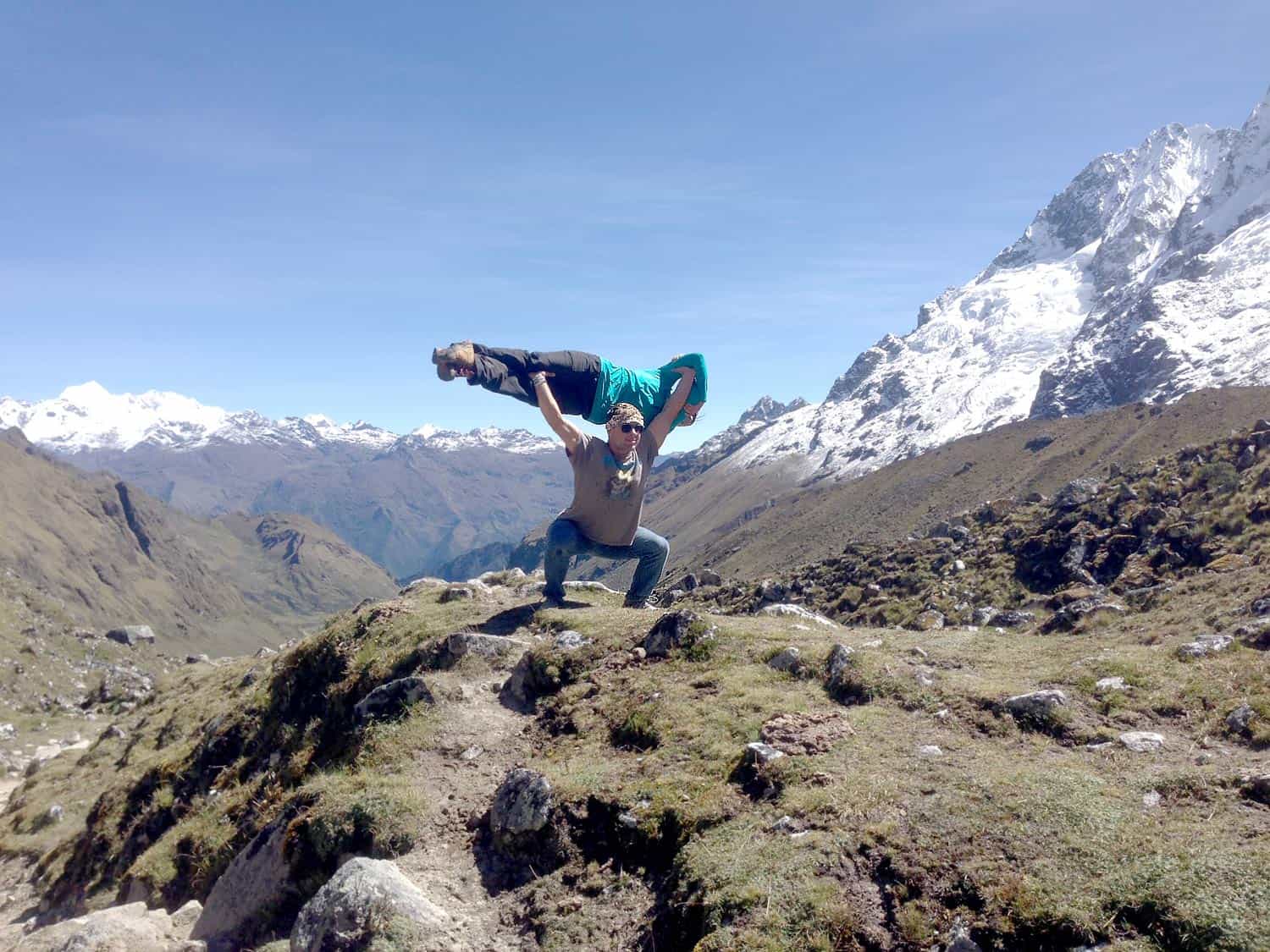
Important: being fit is not the same as being acclimatized. Fit people get altitude sickness too. Read the altitude and acclimatization guide and plan your Cusco days before you plan your training.
Mental preparation
The trek involves camping in remote places and real exposure to Andean weather. That side deserves preparation too: adjust your expectations about comfort and amenities, and treat the days without signal as the point rather than the price. Most people come back describing the disconnection as the best part.
Practically: pack for five climate zones, because being cold and wet is what turns a hard day into a miserable one.
How it compares to the Inca Trail
Salkantay covers a greater elevation range with sharper transitions, and its pass is 415 metres higher than Dead Woman’s Pass on the classic Inca Trail. The Inca Trail has less elevation variation and more gradual changes, but more stone staircases. Neither is technical. The full route comparison sets the two side by side.
If you would rather build in a gentler ramp, the 7-day itinerary with Cusco acclimatization is the easier way to meet the pass.