- Altitude
- ≈ 2,700 m / 8,860 ft
- Visited on
- Day 4
- Rediscovered
- Hiram Bingham, 1912
- Faces
- Machu Picchu, across the Aobamba valley
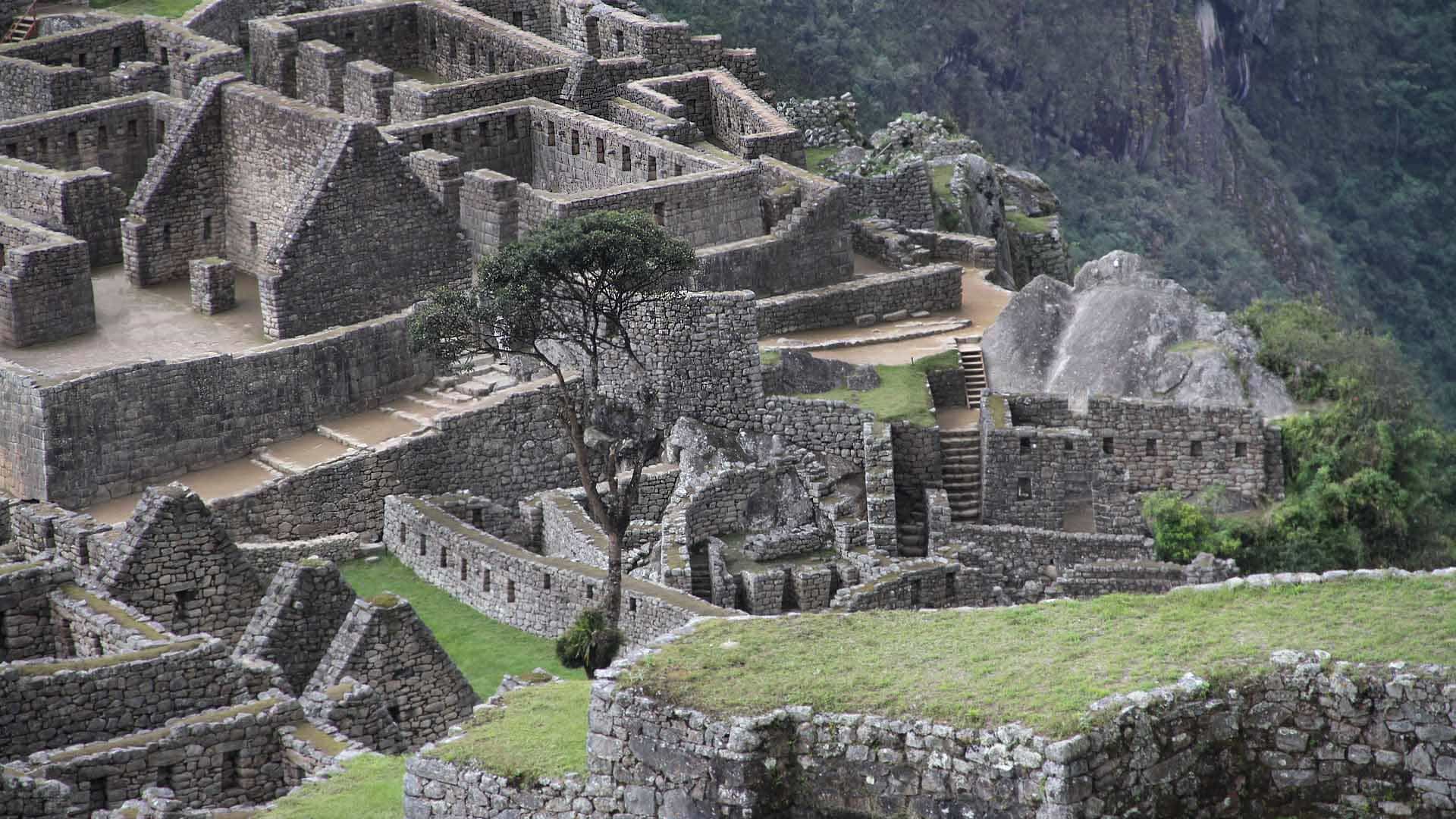
Llactapata is an Inca archaeological site you can visit on the Salkantay Trek, set on a ridge facing Machu Picchu across the deep Aobamba valley. After the high pass and the long descent into cloud forest, the route climbs again to the ruins for one of the trek’s great surprises: a distant, panoramic view of the citadel from a vantage point few day-visitors ever reach.
Are there Inca ruins on the Salkantay Trek?
You will sometimes read that the Salkantay route passes no Inca ruins. That is not quite true. On our itinerary you have the option to explore the archaeological remains of Llactapata, a genuine Inca site set deep in the cloud forest between the high pass and Machu Picchu Pueblo.
It is the honest answer to a question many trekkers ask before they set out: yes, there is Inca stonework on this route. Llactapata is the headline one, reached on the fourth day where the trail follows an ancient path that once connected Machu Picchu to the jungle regions. If archaeology is your main reason for coming to Peru, though, read the comparison with the Inca Trail — that route passes considerably more of it.
Rediscovered by Hiram Bingham
The site was rediscovered by Hiram Bingham — the same explorer who brought Machu Picchu to the world’s attention in 1911. Bingham noted Llactapata on his expeditions, but it was the citadel that captured the headlines, and Llactapata slipped back under the cloud-forest growth for decades before later surveys mapped its full extent.
That history is part of what makes the stop worthwhile: you are standing on an Inca site the most famous explorer of the Andes walked past, looking across the valley at the ruins that made him famous.
The view of Machu Picchu
Llactapata’s greatest reward is the view. From the ruins you look across the valley to Machu Picchu itself — a distant, full-context vista of the citadel and the mountains around it that you simply cannot get from inside the site.
It is a different way to see the Lost City: not from the crowded terraces, but from across the gorge, the way the Inca who built and used this outpost would have seen it. For many trekkers it is the first time they lay eyes on Machu Picchu, a full day before they walk through its gates.
When you visit — day four
You reach Llactapata on the fourth day. That day typically follows portions of a genuine Inca trail — not the famous one, but an ancient path linking Machu Picchu to the jungle — winding through coffee plantations and dense cloud forest with glacier viewpoints set against tropical foliage. The route guide has the day’s distances and timings.
After the ruins, the day descends to the Urubamba and on to Aguas Calientes (1,900 m) at the base of Machu Picchu. Some departures route via the Santa Teresa hot springs instead — ask which applies when you book.
The stop sits in the heart of the route’s big descent, the same drop that carries you through five distinct ecosystems between the glacier and the river.
Which treks include Llactapata
Not every Salkantay itinerary builds in the climb to the ruins, so if seeing them matters to you, choose a trek that makes the stop. The longer 8-day off the beaten path route includes the ancient path to Llactapata and the Machu Picchu viewpoint on its fourth day, and the 7-day Cusco and Salkantay trek can be routed the same way. Tell us at booking and we will confirm it.