- Dry season
- May – September
- Shoulder months
- April & October
- Rainy season
- November – March
- Optimal months
- Apr · May · Jun · Sep · Oct
The Salkantay region, like most of the high Andes, swings between two seasons — and the difference between them shapes everything: trail footing, river crossings, and how often the snow-capped summit shows itself above the pass. Because the route needs no permit, you can plan around the weather instead of a quota calendar — a freedom the classic Inca Trail never gives you.
The two Andean seasons
Rainfall drives almost everything on this trek. In the dry months the air is clearer and the high passes stay open and stable; in the rainy months the cloud forest turns green and alive, but trails go muddy and visibility drops. The transitional shoulder months sit between the extremes: fewer crowds, mostly favourable weather.
Season by season
Weigh the advantages and challenges of each window before you lock in dates.
| Season | Months | Working for you | Working against you |
|---|---|---|---|
| Dry season (peak) | May – September | Minimal rain · clear mountain views · stable, reliable trails | Larger crowds · cold nights (Jun – Jul) · book well ahead |
| Shoulder | April & October | Fewer trekkers · April wildflowers · lush landscapes | Unpredictable weather · occasional rain · morning fog |
| Rainy season | November – March | Vibrant cloud forest · quietest trail · more wildlife | Heavy rainfall · muddy, slippery trails · limited visibility · cancellation risk |
Dry season, May to September — clear views, colder nights
The most popular window, and for good reason. Minimal rain means stable trails and the clearest mountain views, with the sacred summit standing out against blue sky at the 4,630 m (15,190 ft) pass. The trade-off is people and temperature: July and August are peak season with the busiest trail of the year, and nights get genuinely cold — especially in June and July, so pack for freezing camps. Demand is highest here; advance booking is essential.
Shoulder months, April and October — the quiet compromise
April and October sit either side of the dry season and reward trekkers who want the trail to themselves: fewer people, lush green landscapes and, in April, wildflowers blooming as the rains taper off. The weather is less predictable than midsummer — occasional rain, some morning fog, a slight risk of trail issues — but for many hikers the empty trail is well worth it.
Rainy season, November to March — lush, empty, riskier
The rains turn the cloud forest vibrant and bring out more wildlife, all while the trail is at its quietest. The cost is the weather itself: regular heavy rainfall, muddy and slippery trails, and limited visibility at altitude. November, December and March can still be rewarding if you don’t mind getting wet; cancellations do happen when rain closes the access road, which is most likely in January and February.
The weather chart
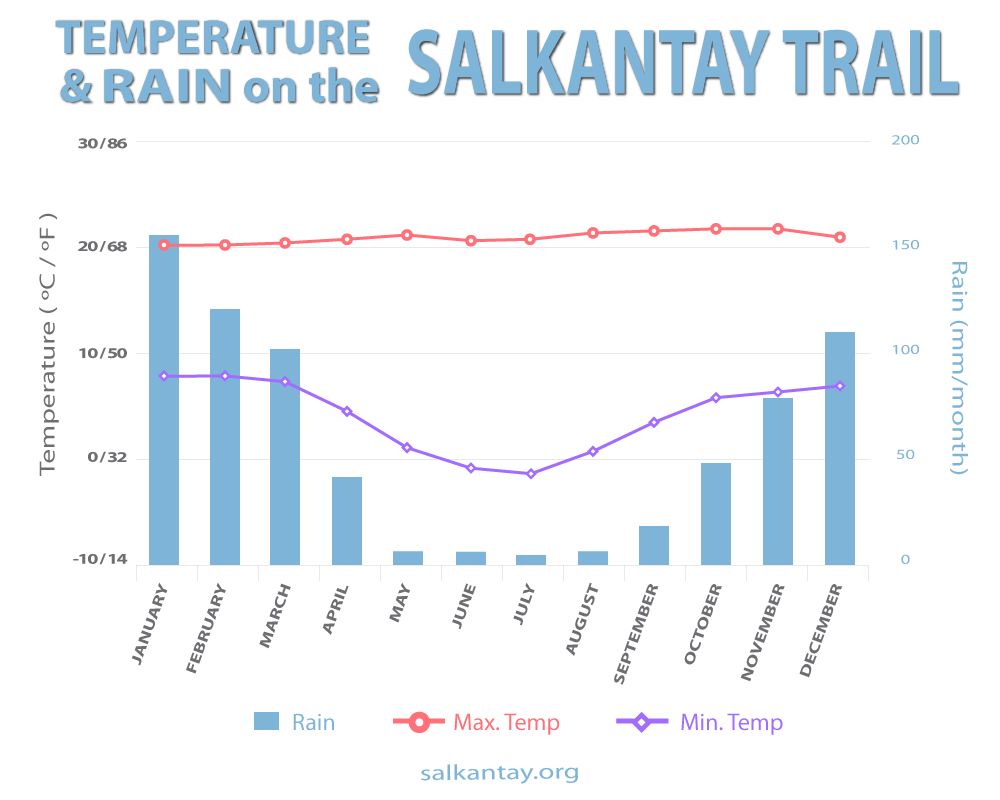
Best months at a glance
If you want the single best balance of clear weather and a manageable trail, target the optimal months below.

April, May, June, September and October are the optimal months for the Salkantay Trek. July and August remain excellent for weather but are peak season — the busiest weeks on the trail.
Booking the right departure
With no permit quota to fight, you are free to pick the season that suits you and depart on a flexible schedule. Once you have settled on your window, choose an itinerary: the Classic 5-day Salkantay Trek runs year-round and matches any of the seasons above. Then work through the rest of the Salkantay Trek guide to arrive prepared.